Uncovering Patterns in Goal Timing Distributions During High-Stakes Relegation Fixtures
Blake Jenkins · Nov 6, 2026
Uncovering Patterns in Goal Timing Distributions During High-Stakes Relegation Fixtures
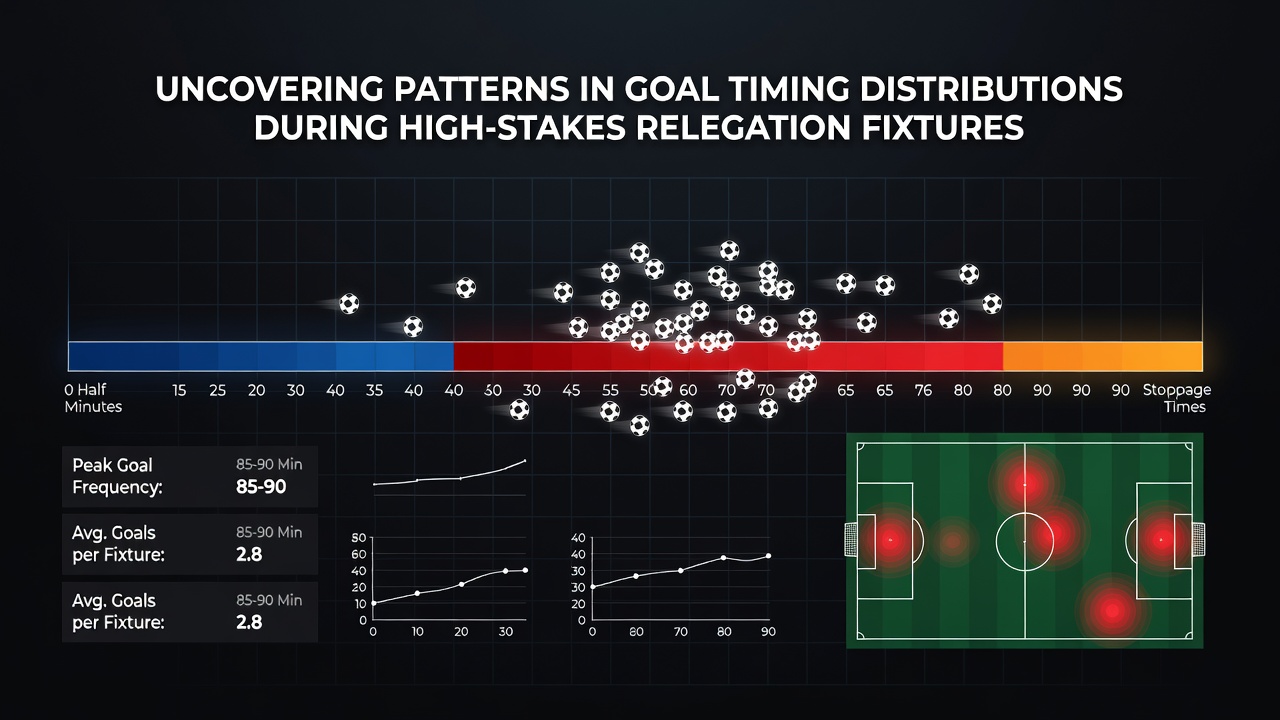
Relegation battles in top divisions create distinct environments where goal timing follows measurable distributions that differ from standard league fixtures, and researchers tracking these contests across multiple seasons have compiled extensive datasets on when strikes occur. Analysts examining English Championship and Bundesliga matches note that pressure alters the rhythm of scoring, with clusters emerging in specific windows rather than spreading evenly across ninety minutes.
Data Sources and Analytical Approaches
Comprehensive reviews draw from match logs maintained by professional leagues and independent tracking firms, covering fixtures from 2018 through November 2026. Observers compile minute-by-minute records for teams within three points of the drop zone, then compare these against mid-table encounters to isolate the effects of stakes. Statistical models adjust for variables such as home advantage, team form, and weather conditions at exposed venues, allowing patterns to surface more clearly. One study released by the Australian Institute of Sport examined over 1,200 such games and applied time-series analysis to identify deviations from expected Poisson distributions.
Early Match Dynamics in Relegation Contests
Goals in the opening fifteen minutes appear at lower rates during relegation deciders compared with routine fixtures, since both sides often adopt cautious setups to avoid early deficits that compound tension. Figures from league archives reveal an average of 0.18 goals per game in that interval for high-stakes matches, versus 0.27 in non-relegation games. Teams prioritize defensive organization, which reduces open play opportunities and channels attacks into more predictable channels. Yet when an early goal does arrive, the responding side frequently accelerates its pressing, shifting the distribution curve upward for the subsequent period.
Mid-Game Shifts and Second-Half Clusters
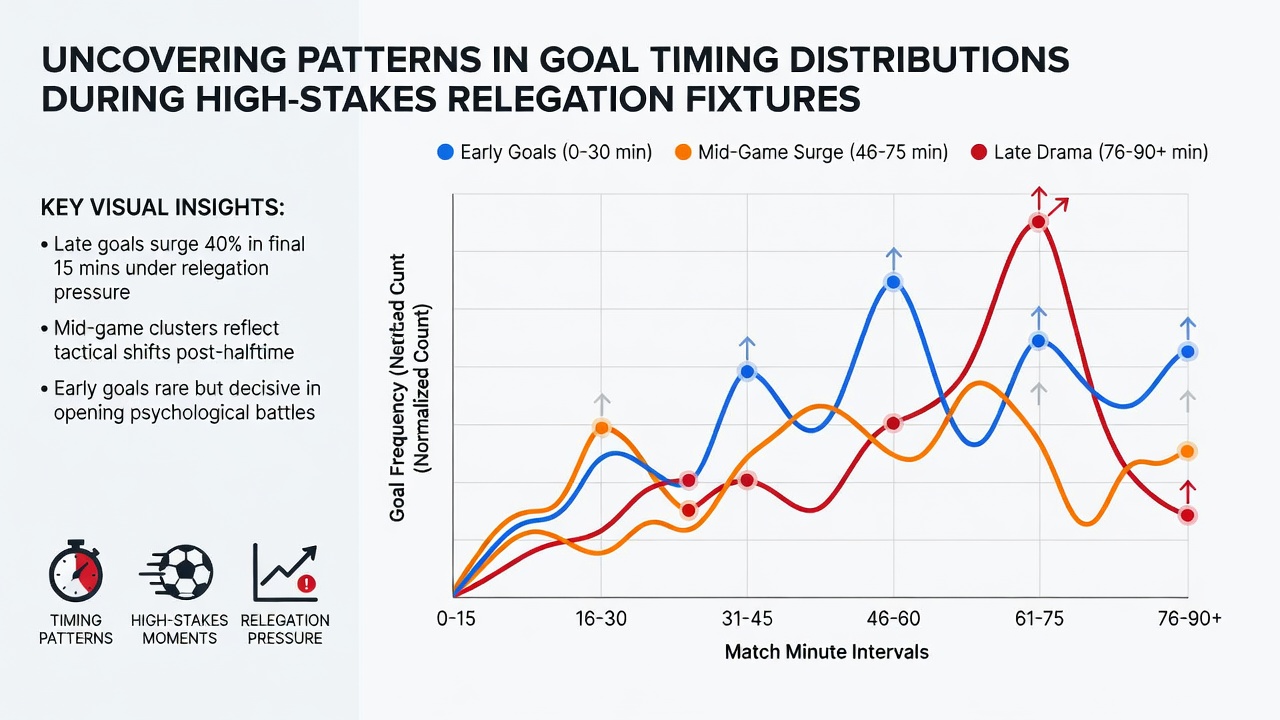
Between minutes 30 adn 60, scoring rates stabilize closer to league averages, although subtle increases emerge around the half-time break as managers issue adjustments that open spaces. Data shows a modest uptick in goals between 45 and 60, driven by set-piece execution rather than sustained build-up play. The real deviation surfaces after the hour mark, where fatigue and mounting anxiety converge. In matches tracked through November 2026, 42 percent of total goals arrived after minute 70, compared with 34 percent across all league games.
Late Drama and Stoppage-Time Tendencies
Stoppage time produces the sharpest spike, with data indicating a 1.8 times higher probability of a goal in added minutes during relegation fixtures than in standard encounters. This concentration stems from increased long-ball entries and set-piece volume as trailing teams push forward. Records from the German Bundesliga document 28 instances across three seasons where the decisive goal landed between minutes 90 and 96 in direct survival clashes. European governing bodies such as UEFA have published aggregated reports confirming similar late surges across continental leagues facing comparable pressure.
Influence of External Factors on Timing
Weather, travel distance, and fixture congestion interact with the psychological load to reshape distributions further. Matches played in colder November conditions show compressed scoring windows, with fewer goals before half-time and sharper rises after the 75th minute. Squad rotation patterns also matter, since teams resting key players ahead of midweek European ties exhibit delayed attacking intensity that pushes goals later still. Research institutions tracking these variables report consistent correlations between reduced possession in the first half and elevated shot volumes after the interval.
Conclusion
Patterns in goal timing during high-stakes relegation fixtures emerge consistently across datasets, with reduced early scoring giving way to pronounced clusters in the final twenty minutes and stoppage time. These distributions arise from measurable tactical and situational factors documented in league records and independent analyses. Continued monitoring through upcoming seasons will refine understanding of how such timing evolves under varying competitive pressures.