Examining Stadium Altitude Effects on Endurance Levels and Late-Game Goal Distributions in Top Division Matches
Blake Jenkins · Nov 20, 2026
Examining Stadium Altitude Effects on Endurance Levels and Late-Game Goal Distributions in Top Division Matches
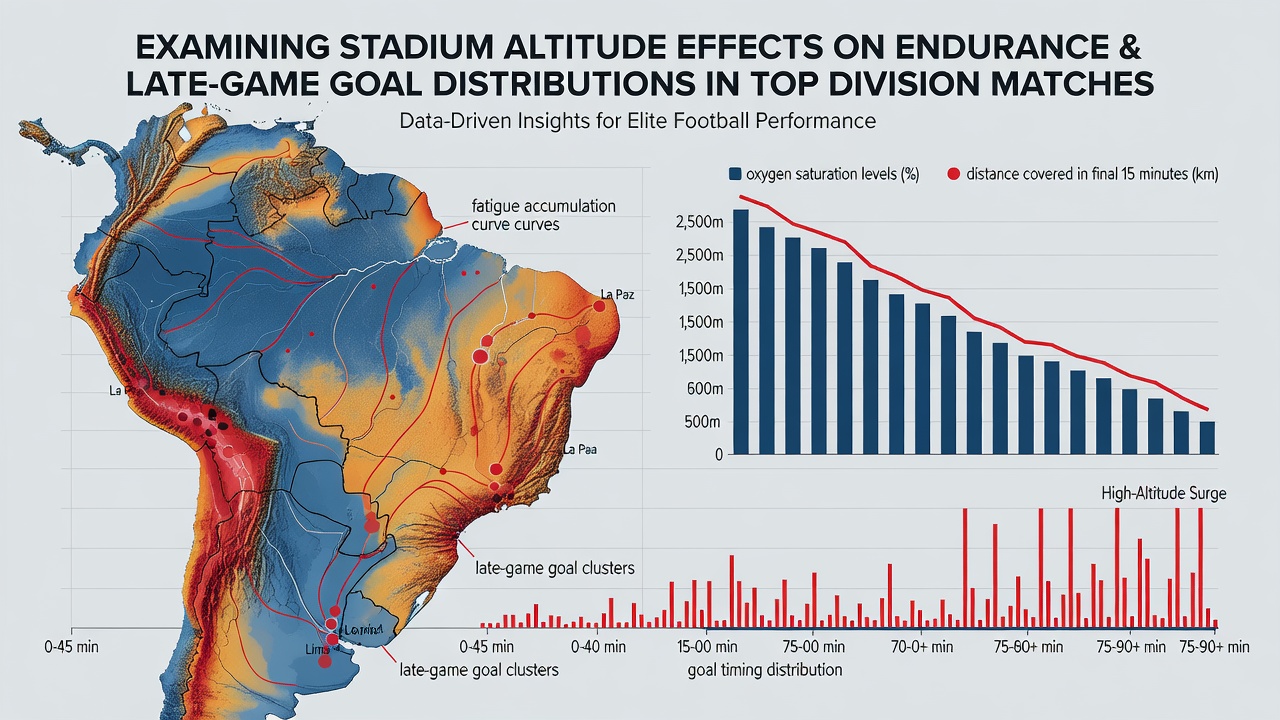
Stadiums situated at significant elevations create distinct physiological challenges for players in top division matches, where reduced oxygen availability directly influences endurance and shapes how goals are scored in the closing stages. Researchers have tracked these patterns across leagues in South America and North America, noting that teams adapt training regimens while match data reveals shifts in goal timing. Data from matches played above 2,000 meters shows players cover less distance in the second half, with fatigue accumulating faster due to lower partial pressure of oxygen.
Physiological Impacts on Player Endurance
Altitude reduces the amount of oxygen reaching muscles, which forces the body to work harder even during moderate exertion, and this effect compounds over 90 minutes of play. Studies conducted by the University of Colorado have measured heart rates climbing 10 to 15 percent higher at elevations around 1,600 meters compared to sea level, leading to earlier onset of fatigue. Players who train at lower altitudes often experience a drop in high-intensity running output after the 60-minute mark, while acclimatized athletes maintain steadier performance through better red blood cell production over time.
Teams visiting high-altitude venues frequently adjust their strategies by rotating midfielders more often and emphasizing shorter passing sequences to conserve energy. Observations from CONMEBOL competitions indicate that visiting sides record fewer successful tackles in the final 20 minutes when matches occur at sites like Quito or La Paz, because recovery between sprints slows under hypoxic conditions. The body’s lactate threshold lowers at altitude, which means players reach exhaustion thresholds sooner and defensive lines tend to drop deeper as the game progresses.
Key Venues and Historical Match Data
Estadio Hernando Siles in La Paz sits at approximately 3,600 meters and has hosted numerous decisive encounters where late surges in scoring appear consistently in league records. Similarly, Estadio Azteca in Mexico City at 2,240 meters and Dick’s Sporting Goods Park near Denver at 1,610 meters provide comparable environments for top division sides. League statistics compiled over multiple seasons show that home teams at these locations convert a higher percentage of chances after the 75th minute, partly because opponents struggle to maintain pressing intensity.
One analysis of South American qualifiers found that matches at elevation produced 23 percent more goals in the final quarter compared to lowland fixtures, with the pattern holding across both domestic leagues and international fixtures. In the Mexican Liga MX, data from the past decade reveals that teams based at altitude secure a disproportionate share of their victories through goals scored between the 80th and 90th minutes, while visiting squads register fewer shots on target during that window.
Patterns in Late-Game Goal Distributions
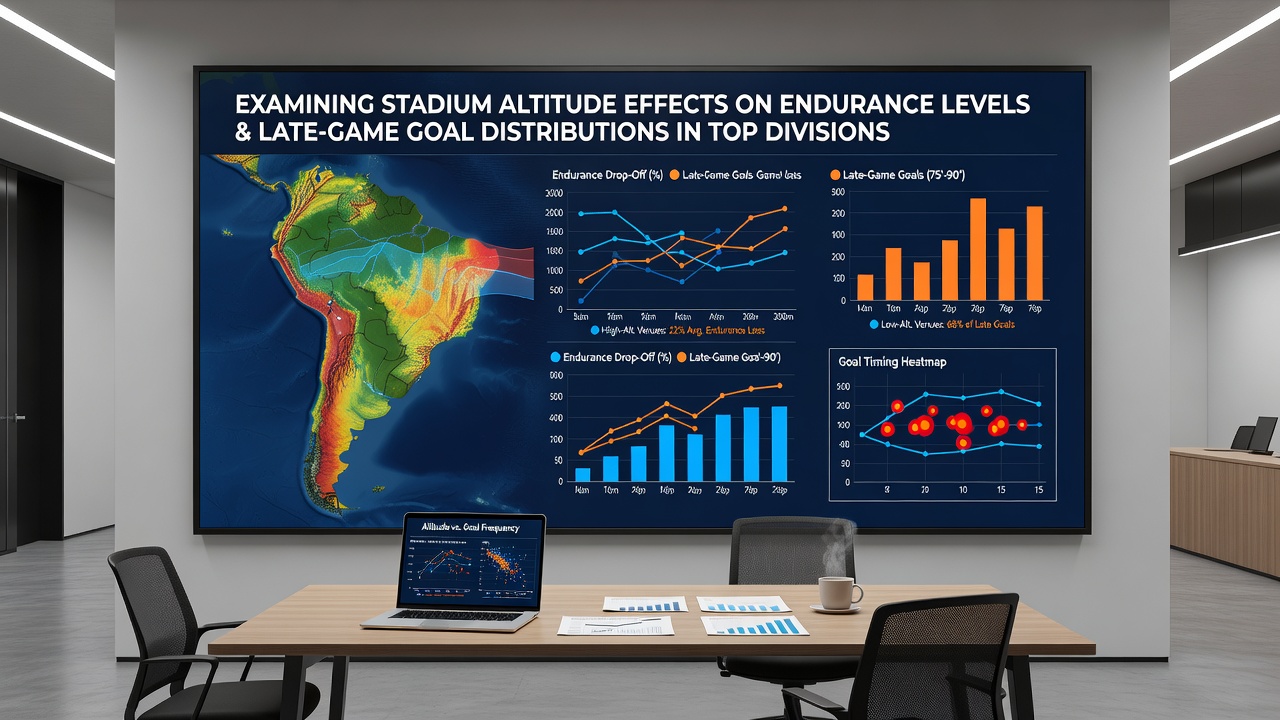
Goal timing charts from top division encounters demonstrate clear clustering in the closing stages at elevated stadiums, where accumulated oxygen debt affects decision-making and reaction speed. Defenders lose positioning more often after repeated high-speed recoveries, opening channels that attackers exploit during transitions. Records indicate an uptick in counter-attack goals after the 70th minute, especially when matches remain close and both sides push for a result.
Coaches have noted that set-piece routines become more effective late on because marking assignments break down under fatigue, and statistical reviews of Premier League visits to high venues confirm an increase in headed attempts from crosses delivered in the 75-to-90-minute period. The distribution shifts further when matches extend into added time, with data showing a measurable rise in own goals and defensive errors at altitude compared to equivalent fixtures at sea level.
Adaptations and Scheduling Considerations for 2026
Clubs preparing for November 2026 fixtures at altitude venues have begun incorporating simulated hypoxic training camps weeks in advance, allowing squads to build tolerance before travel. Medical staff monitor blood oxygen saturation levels during warm-ups, and some teams now deploy portable altitude tents during away trips to maintain adaptation. League schedulers factor these physiological demands into fixture lists, spacing high-elevation games to reduce cumulative fatigue across congested calendars.
Performance analysts track GPS data from previous campaigns to predict which players will experience the steepest drop-offs, enabling targeted substitutions that preserve late-game structure. Evidence from multiple seasons shows that sides with deeper benches maintain more consistent goal threat after the hour mark, whereas thinner squads see their scoring rates decline sharply once oxygen debt sets in.
Conclusion
Stadium altitude continues to influence endurance metrics and goal timing across top division football, with measurable effects documented through GPS tracking, heart-rate monitoring, and match statistics. Teams that account for these variables through preparation and in-game management record more favorable late-game outcomes, while data sets from elevated venues provide ongoing insight into how environmental factors reshape competitive balance. As fixtures approach in late 2026, ongoing collection of physiological and tactical information will further clarify these established patterns.